Best QA.tech Alternatives (2026)


You have read "from $89 a month" on QA.tech's pricing page and started budgeting. Then you reach the plan comparison on the same page, where mobile testing is marked not included on the Starter plan. If you ship a native iOS or Android app, that line matters more than the price.
This guide covers five alternatives to QA.tech plus Quash, our own product, which is placed last and disclosed. It compares them on three things that decide a shortlist: what unit each vendor bills in, what its entry tier includes, and which device types it runs on. All prices are snapshots from 17 November 2026.
The short answer: If you need physical iPhones and iPads without a concurrency commitment, QA Wolf publishes per-run prices for real iOS hardware. If you plan in parallel sessions, Autify publishes a self-serve price with a stated concurrency cap. If you want an itemised rate card and accept virtual devices, Momentic publishes one. If you buy through quotes, mabl and testRigor publish no list price on the pages reviewed.
How these alternatives compare
The table uses figures and gates published on each vendor's own site. Where a vendor publishes no figure, the cell says so.
Tool | Billing unit | Published entry price | Mobile on entry tier | Device class |
QA.tech (incumbent) | Credits per month | Starter $89/month, 50 credits | Not included on Starter | Native mobile on Growth and Enterprise; device class not established |
QA Wolf | Per test run, by platform | Web $1 per run; mobile $2 per run | Pay per run; no tier gate on the pricing page | iOS on real iPhones and iPads; Android on emulators or real devices |
Autify | Credits plus concurrency | Core $99/month billed annually ($120 billed monthly) | Mobile concurrency of 2 on Core | Real devices and emulators |
Momentic | Metered dollars, itemised rate card | Scale $500/month including $500 of usage; Free includes $50 of usage | Hosted mobile minutes are metered | Local or hosted simulators (iOS) and emulators (Android); no physical-device option listed |
mabl | Credits from a stated starting point | Not published; quote only | Not established | Not established |
testRigor | Parallel execution capacity | Not published in the sources reviewed | Mobile runs on its device cloud | Its own device cloud |
Quash (our product) | Executions (one test run on a device) | Free $0; Solo $99/month or $79/month billed annually (see the pricing conflict below) | Free covers local devices and emulators | Physical Android and iOS, local emulators, iOS simulators on Mac, cloud devices; real-device fleet on Enterprise |
A "$2 per run" and a "$99 per month" are different purchases: one scales with runs, the other with credits and concurrency. And "mobile" can mean a cloud simulator or a phone on a desk. Each section below names the unit and the device class so you know what to ask on the demo call.

Get the Mobile Testing Playbook Used by 800+ QA Teams
Discover 50+ battle-tested strategies to catch critical bugs before production and ship 5-star apps faster.
Why teams look beyond QA.tech
QA.tech describes its product as agents that run dynamic tests against your live web or native mobile app on every pull request. Its pricing page lists a free trial with 10 credits and one application, covering web and PR testing. Starter is $89 a month for 50 credits, up to five users and up to two applications. Growth and Enterprise are quoted.
The gate sits in the Starter comparison. Mobile testing, API testing, voice testing, geo and i18n testing, multi-application flows, scheduled test plans, coverage reports and execution-performance reports are marked not included on Starter and included on Growth and Enterprise. A mobile team on the entry plan gets a web-and-PR product with a mobile upgrade path.
On 2 November 2026 QA.tech announced a free trial plus pay-as-you-go pricing, "from $89 a month, with credits spent only when tests run". That changes how you pay, and the feature gates above stay as published. Compare the plan table, not the headline.
QA Wolf
What it is
QA Wolf provides managed end-to-end test coverage. Its documentation describes an agent that maps your application, generates tests from natural-language prompts, runs them in parallel on managed infrastructure, and writes them as standard Playwright code for web and Appium code for iOS, Android and Windows desktop. You own and can modify that code.
Who it suits
You want per-run cost predictability and physical iOS hardware without a concurrency tier, or you want generated test code in your own repository.
Pricing
On its pricing page, QA Wolf bills per test run, by platform. Web runs are $1 (Chrome, Firefox, WebKit, and Electron apps on Linux). Mobile runs are $2, described as "iOS on real iPhones and iPads; Android on emulators or real devices." Desktop runs are $2. Each test gets up to five minutes of run time, and longer tests are billed in five-minute blocks, so a seven-minute web test costs $2 per run. The page says each run is "attempted up to 3 times for free" to catch flakes and false positives.
Where it falls short
Cost scales with suite size, run frequency and minutes per test, so a large nightly suite is a different purchase from a small pull-request suite. Model both. No minimum spend or per-run floor is published, so the minimum commitment is unknown; ask before you budget.
Autify
What it is
Autify is a low-code test automation suite. Its pricing page lists web app, mobile app, desktop app, email and visual-regression testing, and its mobile page says you can run tests on real devices and emulators simultaneously.
Who it suits
You plan in concurrent sessions rather than runs and want a published self-serve price with a defined concurrency cap.
Pricing
Core is $99 a month billed annually, or $120 billed monthly: 6,000 monthly credits, concurrency of five web and two mobile sessions. Team is $450 a month billed annually, or $550 billed monthly: 30,000 monthly credits, concurrency of 20 web and five mobile. A free individual tier has 2,000 one-time credits and concurrency of one web and one mobile. Enterprise is on request. Keep the billing qualifier attached to the $99 figure.
Where it falls short
Credits and concurrency both change by plan, so "6,000 credits" means little without the concurrency cap. What consumes one credit is not published in the pages reviewed, so cost per test is unknown. Ask for a worked example before you commit.
Momentic
What it is
Momentic is an agentic testing platform metered in dollars of usage. Its pricing page names web testing in Chromium and Chrome, iOS on local or hosted simulators, and Android on local or hosted emulators.
Who it suits
You are engineering-led, want a transparent rate card, can forecast usage, and accept virtual devices for mobile.
Pricing
Free includes $50 of usage a month. Scale is $500 a month including $500 of usage. Enterprise is custom. The rate card itemises the meters: $0.0125 per test step, $0.025 per AI-generated or failure-recovery step, $0.10 per minute on a hosted Android emulator, $0.1875 per minute on a hosted iOS simulator, $0.39 per result classification and $1.25 per triaged run. Test steps run in the editor are free; hosted browser, device and voice minutes are billed.
Where it falls short
The pricing page lists local and hosted simulators and emulators, and no physical-device option. If you need physical phones, that path is not shown there. A metered bill depends on suite length and runtime, so two teams on one plan can pay very different amounts, and the rate card gives you no total. Momentic also publishes its own worked example of mobile test costs, which is a useful starting model.
mabl
What it is
mabl is an enterprise-oriented test automation platform. Its documentation describes a command-line tool and AI-assisted authoring and debugging.
Who it suits
You buy through quote-based contracts and already run enterprise procurement for testing tools.
Pricing
mabl publishes no list price. Its pricing page offers "Request a Quote" and "Customized Pricing". It states a starting point of 500 credits per month for cloud test runs, shared across browser and mobile UI and API testing as well as performance and accessibility testing. Local runs are free, and a 14-day trial is advertised. The 500 figure is a starting point, not a plan allowance.
Where it falls short
You cannot compare mabl's cost to the others without a sales conversation. The device class behind its mobile coverage is not established in the pages reviewed. If device class decides your shortlist, ask mabl in writing before an evaluation.
testRigor
What it is
testRigor is a plain-English test automation tool. Its mobile page says tests run on its own device cloud, so you do not need to keep physical devices, with one script intended to work across Android and iOS.
Who it suits
You want to buy capacity rather than seats and run many executions without counting each one.
Pricing
No list price appears in the pages reviewed. Its pricing FAQ says the charge covers the number of servers that run your tests in parallel, and that single sign-on lets anyone in the company log in on one licence. Its licensing guidance lists four pricing variables: number of parallelisations or AI agents, length of commitment, volume and operating system, and places pricing discussion after a demo. A separate free-tests offer publishes $20 per test validation per month for ongoing maintenance of tests testRigor wrote. That is a service fee, not a subscription price.
Where it falls short
The simple FAQ model is qualified by the four variables, so do not assume you pay only for parallelism. The "no physical devices" line describes its cloud execution; it does not say the product cannot use hardware. Ask for a written quote naming all four variables.
Quash (our product)
Disclosure: Quash is our product. It is placed after the five alternatives above, and the limits below are stated against QA.tech and the others.
What it is
Quash's documentation describes it as an AI-powered mobile testing platform for creating, running and maintaining automated tests without writing code. Documented device types are physical Android, physical iOS, local emulators, iOS simulators (Mac only) and cloud devices. For background on the agent-driven approach, see our guide to agentic QA.
Who it suits
You are a QA engineer or mobile team that wants plain-language authoring and a self-serve start on local hardware or emulators, with cloud devices later. It is mobile-first. If your main requirement is a free open-source framework living in your own test code, it is the wrong tool.
Pricing
Quash meters on executions. One execution is one test run on a device, whether local, an emulator or a Quash cloud device. Failed tests count the same as passing ones, generation is unlimited on every plan, and no plan bills overage, according to its pricing documentation. The documented plans:
Free, $0: local devices and emulators, 40 executions to start and then 5 a month, one app, one seat.
Solo, $99 a month or $79 a month billed annually: cloud devices, backend and API validation, full suite management, 150 executions a month, one app, two seats.
Team, quoted: adds CI/CD integrations (GitHub Actions, GitLab, Bitbucket, Jenkins), issue-tracker integrations, webhooks and scheduled regression runs.
Enterprise, quoted: adds the real-device fleet, multiple or unlimited apps, and unlimited seats.
The two pricing sources disagree. The documentation lists the Free and Solo prices above. The commercial pricing page describes Quash Platform as custom-priced, "tailored mainly to your test execution volume", with device infrastructure scoped separately and evaluation starting with a demo call. They may describe different offers, or one may be out of date. Confirm the current entry price with us before you budget.
Where it falls short
CI/CD sits on the quoted Team plan. Pull-request-triggered runs are not on the published Free or Solo tiers, while QA.tech lists PR testing on its free trial and Starter. If PR-triggered runs on a self-serve plan are a hard requirement, Quash's published tiers do not meet it.
The real-device fleet sits on the quoted Enterprise plan. Its cost is not published.
Web scope needs checking. Quash's documentation frames it as a mobile testing platform. If web testing is central, confirm the current web capability before you switch.
Which one to pick
Mobile in the published price, on a small budget: QA Wolf's per-run pricing and Quash's Free and Solo tiers both do this. Model your run volume for each before comparing totals.
Physical iPhones and iPads: QA Wolf publishes real-device iOS runs at $2 each. Quash's real-device fleet is quoted on Enterprise. Momentic lists only simulators and emulators.
Concurrency-based planning: Autify publishes concurrency caps next to its credits.
Not counting seats: testRigor's model centres on parallel capacity and single sign-on. Get the full quote first.
Quote-only procurement: mabl and testRigor route pricing through sales. If procurement needs a published figure, neither supplies one.
PR-triggered runs on a self-serve plan: QA.tech's trial and Starter include PR testing, and Quash's published tiers put CI/CD on Team.
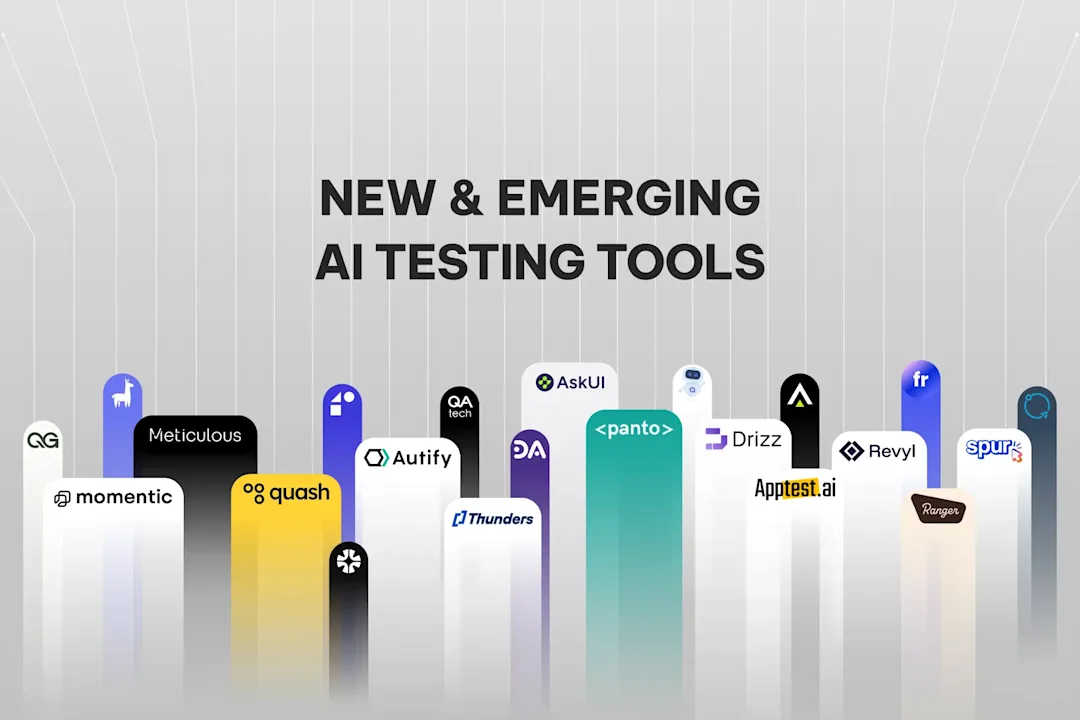
For wider landscapes, our roundup of new AI testing tools covers 23 more platforms.
What the public evidence does not show
Prices are 17 November 2026 snapshots. Check each pricing page before you commit.
Two vendors publish no list price. mabl and testRigor are quote-based in the pages reviewed.
Some cells are unpublished. Autify's credit consumption per test, mabl's device class and QA Wolf's minimum commitment have no public source.
No independent performance data. No reliability, defect-detection or customer-satisfaction comparison of these products is cited here. Treat vendor descriptions as claims.
Emulator versus physical device is unmeasured here. Google documents the Android Emulator as a way to test "on a variety of devices and Android API levels without needing to have each physical device". That states what an emulator is for. It gives no rate at which emulators miss defects that hardware catches, and Quash has no first-party data on it either.
Other roundups cover this keyword. Testmode's QA.tech alternatives page, last reviewed 29 August 2026, names eight alternatives with an at-a-glance table.
Conclusion
Start from your constraint, not the brand. If it is mobile on a budget, price per-run and per-execution models against your own run count. If it is physical devices, get each product's device class in writing before you book a demo. If it is procurement, expect a quote and ask for every pricing variable.
Put the same four questions to every vendor: what counts as one billable unit, what the entry tier includes on mobile, which device types run your tests, and what a month of your real suite costs. The answers will cut your shortlist faster than any feature list.
Continue reading
More articles from the Quash editorial desk.