Best Robot Framework Alternatives in 2026


A Robot Framework suite can outgrow its original job without failing outright. Your keyword tables may still be readable, but the work behind them may now be Python code, browser automation, native mobile testing, or a collection of CI services and reports. Replacing Robot Framework can therefore mean several very different things.
The short answer: the right Robot Framework alternative depends on what you are replacing. pytest is a framework-level choice for Python. Playwright, Selenium, and Cypress are web-testing choices. Appium is a mobile automation layer. Katalon and TestCafe Studio move you toward managed products. Start by drawing that boundary; otherwise, a long alternatives list can hide a major coverage gap.
Robot Framework is an open source automation framework for test automation and robotic process automation (RPA). It uses human-readable keywords and can be extended through libraries in Python, Java, and other languages. A browser runner may replace SeleniumLibrary work successfully while leaving API, desktop, or RPA workflows unresolved.
Robot Framework alternatives at a glance
Alternative | What it replaces | Best for | Main testing surface | Authoring model | Vendor-listed pricing status | Main trade-off |
pytest | Framework-level test authoring | Python engineering teams | Applications and libraries | Python code | No subscription price on docs | Gives up shared keyword tables |
Cucumber | BDD and acceptance workflow | Executable specifications in Gherkin | Acceptance workflows | Gherkin plus step definitions | No subscription price on docs | Not a complete Robot ecosystem replacement |
Playwright | Web E2E layer | New web-focused suites | Web | Code-first test runner | No subscription price on docs | Web-focused |
Selenium | Browser automation layer | Established browser ecosystems | Web | Language bindings | No subscription price on project site | Requires surrounding tooling |
Cypress | Web runner, optionally Cloud workflow | JavaScript web testing | Web | JavaScript test runner | Cloud Starter is free; paid Cloud plans available | Experimental WebKit; web-only scope |
WebdriverIO | Node.js web and mobile stack | JavaScript teams spanning browser and mobile work | Web and mobile/hybrid | Node.js framework | No subscription price on site | Appium-oriented mobile setup |
Appium | Native and hybrid mobile layer | Mobile automation | Clients, drivers, and plugins | Code-first client/driver architecture | No subscription price on docs | Modular components to configure |
Katalon | Framework plus commercial QA platform | Broad QA operations | Web, mobile, API, desktop | No-code, low-code, or full-code | Paid per-seat Studio plans listed | Platform procurement decision |
TestCafe Studio | Visual web-authoring environment | Low-setup web E2E authoring | Web | Visual IDE | Paid Studio products listed | Not a general automation framework |
This is a classification, not a performance ranking. It separates framework replacement, surface replacement, and platform procurement—the distinction that often disappears when a comparison mixes web, mobile, API, and BDD products.

Get the Mobile Testing Playbook Used by 800+ QA Teams
Discover 50+ battle-tested strategies to catch critical bugs before production and ship 5-star apps faster.
Decide what you are replacing before you migrate
Your first decision is architectural, not brand-led. Inventory the libraries, integrations, and test types in your Robot Framework estate. A suite built mostly around browser keywords has a different successor shortlist from a suite using custom Python libraries, API checks, and RPA tasks.
Use these four questions to narrow the list:
Who writes and maintains the tests? If your authors are Python developers, pytest may fit. If product and delivery stakeholders review scenarios, Cucumber’s Gherkin workflow may fit better.
What surface creates the most testing work? Use a web specialist for browser E2E work and a mobile specialist for native or hybrid apps. Do not assume either covers every Robot library you use today.
Are you replacing a framework or buying an operating model? A framework still leaves you to choose CI, reporting, device access, and support. A managed platform changes that procurement and governance decision.
Which dependencies must survive the move? Map custom keywords, fixtures, test data, reports, browser or device infrastructure, and CI triggers before selecting a replacement.
That framing prevents a common migration error: choosing a technically capable browser tool when your real requirement is shared authoring, or buying a platform when the job is a small Python test suite.
pytest: best for Python teams moving to code-first tests
What pytest is
pytest is a Python testing framework for small, readable tests that can scale to complex functional testing for applications and libraries. It is the closest framework-level alternative in this list when you want ordinary Python code instead of Robot Framework’s tabular keyword syntax.
Who pytest suits
Choose pytest when your test authors are comfortable in Python and want test logic, helpers, and assertions in the same language. It can be a sensible move when Robot keywords are primarily thin wrappers around Python implementations.
If you are weighing pytest’s fixtures and discovery model against Python’s standard-library option, Quash’s pytest versus unittest guide addresses that narrower decision.
Key pytest features
The project documents detailed assertion introspection, automatic discovery of test modules and functions, modular fixtures, unittest compatibility, and a plugin ecosystem. Those capabilities make pytest extensible, but they do not provide a bundled device cloud, browser farm, or RPA runtime.
pytest pricing
The official documentation does not list a subscription price. Your spend, if any, comes from choices around CI compute, browser or device infrastructure, reporting, and support rather than from a pytest subscription.
Where pytest falls short
pytest is code-first. It does not preserve a shared keyword vocabulary for authors who prefer business-readable tables, and it does not replace every testing surface that Robot Framework can reach through libraries. Treat it as a Python framework decision, not a complete platform decision.
Cucumber: best for Gherkin-based executable specifications
What Cucumber is
Cucumber supports behavior-driven development through executable specifications written in plain text. Its documentation describes Gherkin scenarios, scenario reporting, and step definitions that connect written steps to implementation code.
Who Cucumber suits
Choose Cucumber when your reason for leaving Robot Framework is collaboration around examples and stakeholder-readable acceptance criteria. It is a workflow alternative for Gherkin-based scenarios, rather than a universal replacement for Robot’s library-driven automation model.
Key Cucumber features
Cucumber provides a plain-text specification layer, Gherkin grammar, scenario reports, and bindings between scenarios and code. That makes specifications accessible to non-developers, but the executable behavior still relies on maintained step definitions and language and runtime integrations.
Cucumber pricing
The official documentation page does not publish a subscription figure. Evaluate any hosted or enterprise product separately from the documented BDD workflow.
Where Cucumber falls short
Cucumber does not supply Robot Framework’s complete library and execution ecosystem. You still choose underlying automation libraries, write step definitions, and maintain the connection between readable scenarios and code. Choose it when BDD is the problem you need to solve.
Playwright: best for a new web-focused engineering suite
What Playwright is
Playwright Test is an end-to-end framework for modern web applications. Its documented workflow bundles a test runner, assertions, isolation, parallelization, and related tooling.
Who Playwright suits
Choose Playwright when you are building or rebuilding a web E2E suite and want browser-level control in an engineering-led stack. It is relevant when most of your Robot Framework work is browser automation rather than general RPA or a varied library estate.
Key Playwright features
Playwright documents Chromium, WebKit, and Firefox support on Windows, Linux, and macOS, alongside local or CI execution and headed or headless runs. It also documents mobile emulation for Chrome on Android and Mobile Safari. Emulation can help with browser behavior, but it is not the same as testing a native mobile app on hardware.
Playwright pricing
The framework documentation does not state a subscription price. Budget separately for CI, any hosted browser service, and support arrangements you choose.
Where Playwright falls short
Playwright changes both your authoring model and your testing boundary. It is web-focused, so it does not automatically replace Robot Framework use cases involving desktop applications, RPA, or custom non-browser libraries. If your migration starts with Selenium-based browser tests, Quash’s Selenium-to-Playwright migration guide covers that browser-specific transition.
Selenium: best for established browser ecosystems and distributed execution
What Selenium is
Selenium is a browser automation project centered on WebDriver, a collection of language-specific bindings for browser-based regression automation. The project also includes Selenium IDE and Selenium Grid.
Who Selenium suits
Choose Selenium when you have existing Selenium expertise, need familiar language bindings, or run browser sessions across machines and environments. It is especially relevant if SeleniumLibrary represents most of your current Robot suite.
Key Selenium features
Selenium WebDriver provides the browser-automation interface. Selenium IDE is an add-on for simple record-and-playback in Chrome, Firefox, and Edge, while Selenium Grid addresses distributed execution and multi-environment management. These are separate components, not one turnkey platform.
Selenium pricing
The Selenium project site does not state a subscription or license price. Hosted browser infrastructure, test reporting, and support remain separate decisions.
Where Selenium falls short
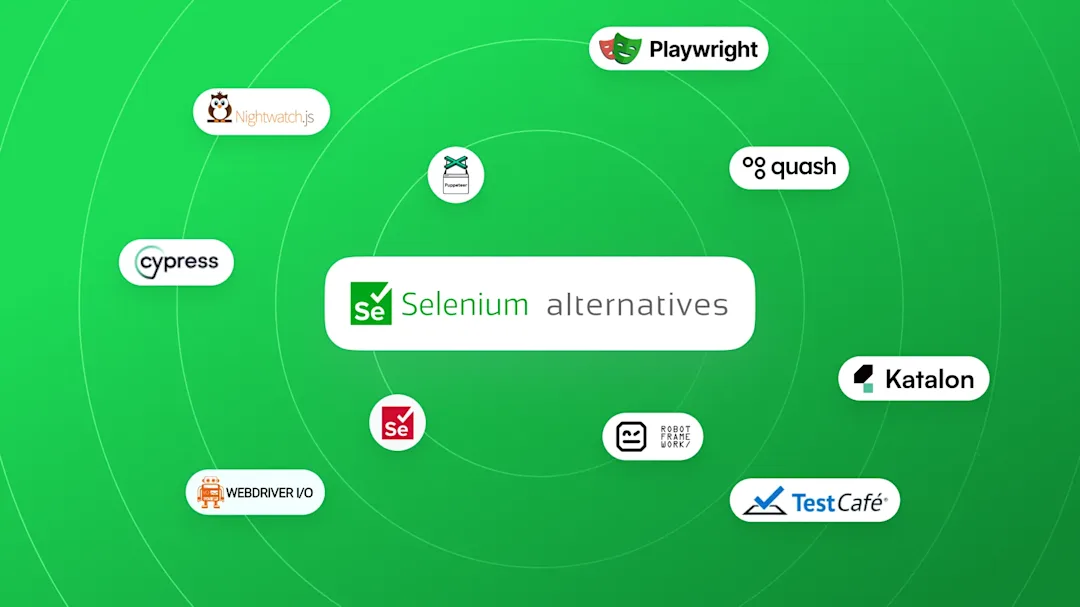
Selenium is a browser automation layer, not Robot Framework’s general keyword-driven abstraction. Moving to it changes how you author tests and can leave mobile, API, desktop, or RPA requirements to other tools. For a wider web-framework comparison, read Quash’s guide to modern Selenium alternatives.
Cypress: best for web teams that want an optional Cloud layer
What Cypress is
Cypress Cloud is a separately priced commercial layer around Cypress’s open-source application. Adopting the local runner does not require a Cloud plan, which matters when you compare its pricing with a managed platform.
Who Cypress suits
Choose Cypress for browser-focused JavaScript testing when you want a local runner now and may later want centralized run data, orchestration, analytics, or collaboration. It does not replace every Robot Framework library or native mobile automation.
Key Cypress features
Cypress documents support for Chrome-family browsers, Firefox, and experimental WebKit in its browser documentation. Experimental WebKit is not equivalent to testing Safari.app; it is a distinct coverage claim.
Cypress pricing
As listed on the vendor’s pricing page on September 10, 2026, Cypress Cloud Starter is free and includes 10 users and 500 test results per month. The page lists Team from $67 per month billed annually, Business from $267 per month billed annually, and Enterprise at custom pricing. These are Cloud prices, not a license fee for the open-source runner.
Where Cypress falls short
Cypress remains a web-testing choice. Its browser scope does not provide native mobile, desktop, RPA, or general non-browser coverage. Confirm required browser behavior in a pilot, particularly when WebKit coverage affects a release decision.
WebdriverIO: best for Node.js teams spanning web and mobile work
What WebdriverIO is
WebdriverIO is a browser and mobile automation test framework for Node.js. Its documented scope includes web E2E testing as well as browser unit and component testing.
Who WebdriverIO suits
Choose WebdriverIO when you want a JavaScript-oriented stack for browser testing and mobile or hybrid-app work. It is a more relevant Robot Framework alternative than a browser-only runner when your roadmap genuinely includes both surfaces.
Key WebdriverIO features
The project documents automatic waiting, WebDriver and WebDriver BiDi support, and native mobile testing on real mobile devices, smart TVs, and other IoT devices through Appium. That “through Appium” boundary matters: mobile reach depends on an Appium-oriented architecture rather than a separate turnkey device platform.
WebdriverIO pricing
The official project site does not list a subscription price. Factor device access, CI capacity, cloud infrastructure, and support into your evaluation independently.
Where WebdriverIO falls short
WebdriverIO introduces a Node.js, WebDriver, and—where mobile is involved—Appium-oriented setup. It does not retain Robot Framework keyword tables, and its device surface is not a claim of general RPA coverage.
Appium: best for native and hybrid mobile automation
What Appium is
Appium is a modular automation system composed of Appium Core, platform drivers, language clients, and plugins rather than one monolithic tool.
Who Appium suits
Choose Appium when native or hybrid mobile automation is the real reason you are looking beyond Robot Framework. It is a mobile UI automation choice, not a replacement for every framework, API, desktop, and RPA use case in a broad Robot estate.
Key Appium features
Appium’s documentation says a working automation setup needs Appium itself, a driver for the target platform, and a client library for your programming language. That modularity lets you choose components for your environment, but it also makes drivers, clients, and device infrastructure part of the implementation work.
Appium pricing
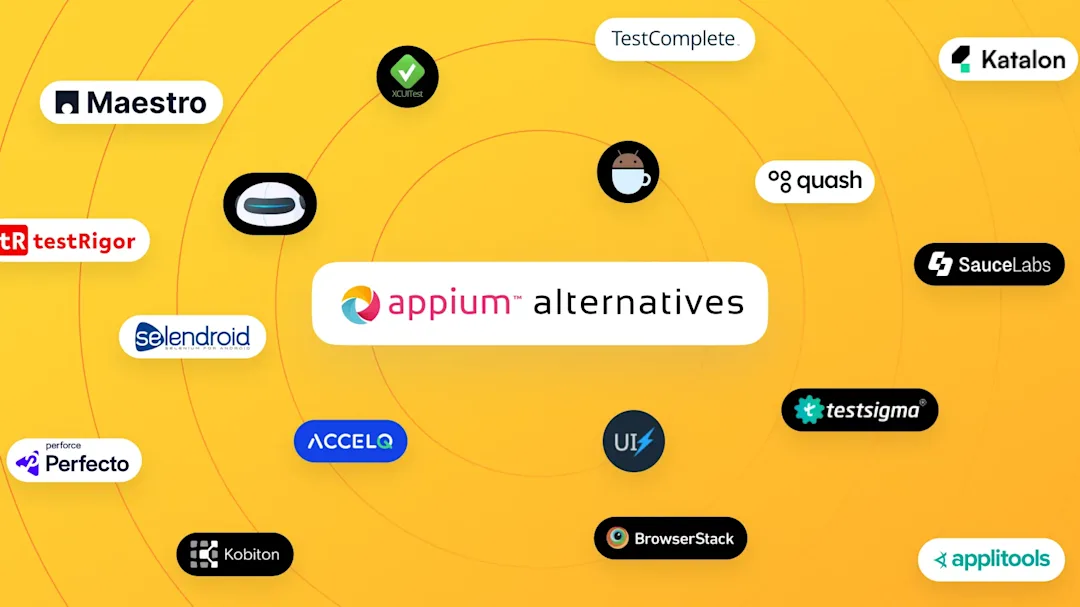
The official documentation does not publish a subscription price. Physical devices, device clouds, CI compute, and commercial support are separate costs. If Appium’s implementation model is not the right fit after you define your mobile requirements, Quash’s Appium alternatives guide provides a separate mobile-focused shortlist.
Where Appium falls short
Appium does not provide a complete Robot Framework replacement by itself. It is a mobile automation layer, so you still need an authoring approach, test management, an execution environment, and coverage for work outside mobile UI testing.
Katalon: best for an integrated commercial QA platform
What Katalon is
Katalon describes Katalon Studio as supporting no-code, low-code, and full-code authoring for web, mobile, API, and desktop tests. It belongs here because it changes the choice from selecting a framework to adopting a commercial QA platform.
Who Katalon suits
Choose Katalon when you want a broader platform rather than assembling a framework, execution infrastructure, management layer, and reporting workflow yourself. It can be relevant when Robot Framework’s flexibility has become operational overhead.
Key Katalon features
The vendor describes authoring across web, mobile, API, and desktop through several authoring approaches. Those are Katalon product-scope claims, not evidence that it is faster, cheaper, or more reliable than another option.
Katalon pricing
On its vendor pricing page checked September 10, 2026, Katalon listed Individual Katalon Studio at $180 per seat per month on monthly billing. It also listed $84 per seat per month billed annually for the first three seats and $150 per seat per month billed annually from the fourth seat. Katalon lists other products and execution units separately, so these Studio seat figures are not a total-platform price.
Where Katalon falls short
Katalon is a commercial operating-model choice as well as a test-tool choice. Your total cost depends on the authoring, management, runtime, and cloud-execution components you need. Validate those components against the Robot libraries and integrations you plan to retire.
TestCafe Studio: best for visual, low-setup web authoring
What TestCafe Studio is
TestCafe Studio is a cross-platform IDE for end-to-end web testing. DevExpress says its documented workflow does not require WebDriver, browser plugins, or other tools.
Who TestCafe Studio suits
Choose TestCafe Studio when visual test authoring and a low-setup web E2E environment matter more than retaining a general-purpose keyword-driven framework. It is a web IDE choice, not an all-surface replacement.
Key TestCafe Studio features
The vendor describes visual test creation, execution across desktop, mobile, and cloud browsers, UI or headless runs, and a 30-day free trial. In this context, “mobile” refers to browser execution coverage; it is not a native-app automation claim.
TestCafe Studio pricing
On the vendor page checked September 10, 2026, DevExpress listed TestCafe Studio at $249.99 and TestCafe Studio Pro at $499.99. The page states that the annual subscription includes 12 months of free updates. These prices apply to the Studio IDE.
Where TestCafe Studio falls short
TestCafe Studio is web-focused, so you need separate evidence and tooling for native mobile, API, desktop, or RPA work. Separate the paid IDE from the free and open-source TestCafe runner, which is a different product supporting JavaScript and TypeScript tests.
Build a shortlist by use case
You do not need to evaluate all nine products. Start with the replacement class that matches your actual constraint.
You want Python code instead of Robot keywords: shortlist pytest.
You want business-readable executable specifications: shortlist Cucumber, then select the underlying automation bindings deliberately.
You are replacing browser E2E coverage: shortlist Playwright, Selenium, and Cypress according to your language, ecosystem, and Cloud requirements.
You need one Node.js-oriented approach for web and mobile or hybrid automation: shortlist WebdriverIO.
You need native or hybrid mobile automation: shortlist Appium first, then compare the device and execution model you need.
You want a commercial platform across several testing surfaces: shortlist Katalon.
You want a visual IDE for web E2E work: shortlist TestCafe Studio and compare it with the free runner if a paid IDE is not essential.
Disclosure: Quash is our product. If your requirement is a managed, mobile-first workflow rather than an open-source framework, Quash is another option to evaluate. Its test execution product describes plain-language runs on Android, iOS, and web targets with run evidence. It is not an open-source code library, so it is not the right choice when source-level framework control is non-negotiable.
No first-party Quash telemetry, customer evidence, or completed experiment measures Robot Framework migrations or compares these alternatives. The public record also lacks a verified, large-scale migration benchmark that runs the same representative Robot suite under the same infrastructure and success criteria across the options above. A study that publishes maintenance effort, execution conditions, and failure evidence for that common method would be needed to support a speed, reliability, or cost ranking.
Use a representative migration pilot
A shortlist is only useful when you test it against work your suite performs. Run a small pilot before converting a large keyword library.
Inventory your current suite. Label each suite by surface: web, native mobile, API, desktop, RPA, or custom-library workflow. Note Robot libraries, custom keywords, variables, and external services.
Choose representative tests. Include a simple happy path, a data-driven or fixture-heavy test, a failure-reporting case, and the workflow with the hardest infrastructure dependency.
Define authorship upfront. Decide whether developers, QA specialists, and non-technical stakeholders need to read, edit, or approve tests. This can rule out a technically capable tool before you write migration code.
Map the translation work. Identify what becomes functions and fixtures, Gherkin steps, selectors, page objects, drivers, or managed-platform assets. Do not count a tool as a fit until you know where your custom Robot keywords go.
Verify execution conditions. Test the browsers, operating systems, devices, credentials, network conditions, and CI environment you will use in production. A local green run is not a deployment plan.
Compare failure evidence. Check what developers receive when a test fails: logs, screenshots, recordings, traces, reports, and the context needed to reproduce the issue.
Decide on one bounded outcome. Migrate one testing surface or representative suite first. Keep Robot Framework for unaffected coverage until the replacement proves it can own the agreed boundary.
Conclusion
There is no universal best Robot Framework alternative because Robot Framework can sit above very different kinds of work. pytest is the direct choice when you want Python-first framework authoring. Cucumber is for a BDD specification workflow. Playwright, Selenium, and Cypress are web decisions; WebdriverIO and Appium matter when mobile automation is central. Katalon and TestCafe Studio are commercial product decisions with different scope.
Choose the tool that replaces the part of Robot Framework you actually need to change, then prove that decision with a representative pilot. That is how you avoid trading a familiar framework for a new gap in your test stack.
Continue reading
More articles from the Quash editorial desk.