AI in Software Testing 2026: The QA to SDET Transition


Software testing is undergoing a paradigm shift as we approach 2026. Traditional QA (Quality Assurance) roles are rapidly evolving into SDET (Software Development Engineer in Test) positions with heavy AI/ML focus. This evolution is driven by the need for faster release cycles, more intelligent automation, and the integration of machine learning into QA processes. In 2025 we saw AI make significant waves in testing, and by 2026 “AI in software testing” is no longer a novelty – it’s becoming a core part of how we assure quality. This post explores what’s driving the QA to SDET transition, the AI tools for test automation 2026 that empower modern SDETs, practical tips for testers to upskill, and how these changes affect areas like mobile testing with AI. We’ll also look ahead at the SDET’s role in the AI era and how to stay future-proof in this fast-changing field.
Why QA Is Evolving into AI-Focused SDET Roles
Several forces are pushing the industry from traditional QA toward AI/ML-focused SDET roles. DevOps and CI/CD practices have become the norm, meaning testing must keep up with rapid, continuous deployments. Organizations can no longer rely on slow, manual testing cycles – they need engineers in test who can develop automation and integrate it directly into the development pipeline. This demand has elevated the QA role into a more technical one. Instead of being separate “checkers,” testers are now embedded as SDETs ensuring quality throughout development.
At the same time, advances in AI and automation are redefining testers’ responsibilities. Repetitive tasks that “traditionally demanded human intervention” are now handled by AI-driven tools. As a result, SDETs are expected to create AI-powered testing solutions and harness machine learning algorithms as part of their job. In practice, this means a tester might build an intelligent script that can adapt to changes or develop a model to predict high-risk areas of the application. Their role is expanding from writing basic scripts to optimizing testing processes with AI and integrating smart frameworks into CI/CD pipelines.
As that remit broadens, a practical guide to building AI agents for development teams can help SDETs translate AI capabilities into maintainable engineering workflows.
Quality assurance is becoming a strategic function rather than a support role. Modern QA/SDET professionals are described as “automation architects, AI collaborators, and business interpreters” who use AI insights to drive better product quality. Rather than manually executing test cases, they design test strategies and oversee intelligent automation systems. For example, an AI system might autonomously prioritize tests, run diagnostics after failures, and even suggest code fixes – with the SDET now “overseeing the overseer” of testing. This frees human testers to focus on strategy, creative test design, and complex scenarios that AI might miss. As one practitioner observed, AI-based test automation leads to “faster feedback [and] reduced flaky tests,” allowing QA engineers to concentrate on higher-level quality goals.
This expanded remit supports the broader shift toward context-carrying engineers, where technical judgment matters as much as automation fluency.
It’s important to note that the rise of AI in QA is generally viewed as augmenting the SDET, not replacing them. There are understandable job displacement fears, but adopting AI “is not here to replace SDETs but to enhance their capabilities.” While AI handles tedious and time-consuming tasks, human SDETs remain critical for test strategy, analyzing complex scenarios, and making judgment calls. In fact, organizations increasingly seek out testers who can leverage AI effectively rather than avoiding it. The World Quality Report 2025 found that 58% of enterprises are upskilling QA teams in AI tools (as well as cloud and security), highlighting that companies want their testers to be fluent in AI by 2026. In short, the “QA to SDET transition” is being driven by the dual pressures of DevOps speed and AI capability – pushing testers to become tech-savvy engineers in test who can wield AI as a powerful ally.

Get the Mobile Testing Playbook Used by 800+ QA Teams
Discover 50+ battle-tested strategies to catch critical bugs before production and ship 5-star apps faster.
SDET Role in the AI Era: New Responsibilities and Skills
In the AI era, the SDET role comes with new responsibilities and required skills that differ markedly from those of a traditional manual tester. Modern SDETs are expected to be full-fledged software engineers who specialize in quality. This means strong programming skills, understanding of software architecture, and the ability to build and maintain complex test frameworks. Learning programming languages (Java, Python, JavaScript, etc.) and automation frameworks is foundational – an SDET should be comfortable writing code to test code. Many organizations now list software development experience as a key requirement for QA roles, reflecting that an SDET is first an engineer.
Beyond core coding, SDETs now often need a basic understanding of machine learning concepts and data analysis. As AI-driven testing tools enter the scene, knowing how an ML model works (training, bias, validation) helps SDETs effectively use and trust those tools. It also prepares them to test AI/ML systems themselves. Indeed, a new frontier for QA is validating AI models – checking for accuracy, fairness, robustness, and bias in model outputs. We’re seeing the emergence of roles like “AI Test Engineer” or “AI QA Tester” at companies, where the tester is responsible for things such as verifying that an ML model’s decisions meet quality standards and that training data is sound. Even if your title isn’t explicitly “AI Tester,” as an SDET you may collaborate with data scientists to ensure models are properly evaluated and integrated into the product.
SDET responsibilities now routinely include tasks like:
Designing and implementing AI-driven test automation – e.g. incorporating an AI tool that generates test cases or a script that uses ML to prioritize what to run. SDETs might write code to interface with an AI API (for example, calling a machine learning service to analyze log data for anomalies).
Maintaining self-healing test frameworks – Modern test suites can use intelligent algorithms to auto-fix broken test scripts (for instance, updating a locator if a UI element’s ID changes). SDETs configure and oversee these self-healing capabilities to ensure tests stay stable with minimal manual intervention.
Integrating testing into CI/CD with AI assistants – It’s increasingly an SDET’s job to embed tests in the pipeline such that they run automatically on each code change. By 2026, an estimated 40% of large enterprises will have AI assistants integrated into CI/CD workflows to automatically run tests and analyze results. SDETs need to manage these AI agents (for example, an AI that decides which regression tests to execute based on code changes) and verify they’re functioning correctly.
Emphasizing test strategy and risk analysis – Since AI can handle many grunt tasks, SDETs add value by defining what should be tested and how. They focus on critical thinking: deciding edge cases to explore, assessing where AI might misjudge, and injecting human creativity into testing. An AI might not know the business implications of a certain feature failing – the SDET does, and designs tests accordingly.
Ensuring AI ethics and transparency in testing – With AI making decisions in test processes, SDETs must keep an eye on potential biases or errors introduced by those AI components. For instance, if an AI test generator is trained on limited data, it might systematically miss scenarios. The SDET acts as a check, reviewing AI-driven test cases and results for validity. They also document how AI is used in the quality process, ensuring there’s accountability and understanding of the “why” behind test outcomes.
Crucially, the mindset of a tester has to shift in the AI era. Instead of thinking “How do I manually verify this feature works?” an SDET in 2026 thinks “How do I ensure this feature is thoroughly tested through automation and AI – and what do I need to build or utilize to make that happen?” Testers transitioning to SDET roles often find they must become comfortable with tooling and engineering practices beyond traditional QA. This includes learning version control (Git), becoming proficient with cloud environments or containers for test deployment, and even basic CI/CD tooling. Testers are increasingly working in the same codebase as developers, writing test code alongside application code. In many teams, “everyone becomes QA” to some degree – meaning the lines between developer and tester blur, and SDETs facilitate quality throughout the team by, for example, writing libraries that other developers use to generate tests, or coaching developers on writing better unit tests.
For teams deciding whether to build automation capability internally, QA to SDET transition clarifies the engineering practices that model requires.
Finally, SDETs in the AI era are expected to continuously learn. The field is evolving so fast that the best SDETs treat learning as part of the job. Whether it’s picking up a new test framework, exploring a new AI tool, or staying current on programming techniques, continuous upskilling is the norm. Engaging with the testing community is a common way to do this – many SDETs participate in forums and communities (e.g. Ministry of Testing Club, Stack Overflow, LinkedIn groups) to share knowledge on AI and automation trends. In summary, the SDET of 2026 wears many hats: developer, tester, data tinkerer, and even AI supervisor. It’s a challenging role, but for those who embrace it, it’s also extremely rewarding to be at the cutting edge of quality engineering.
AI Tools for Test Automation in 2026
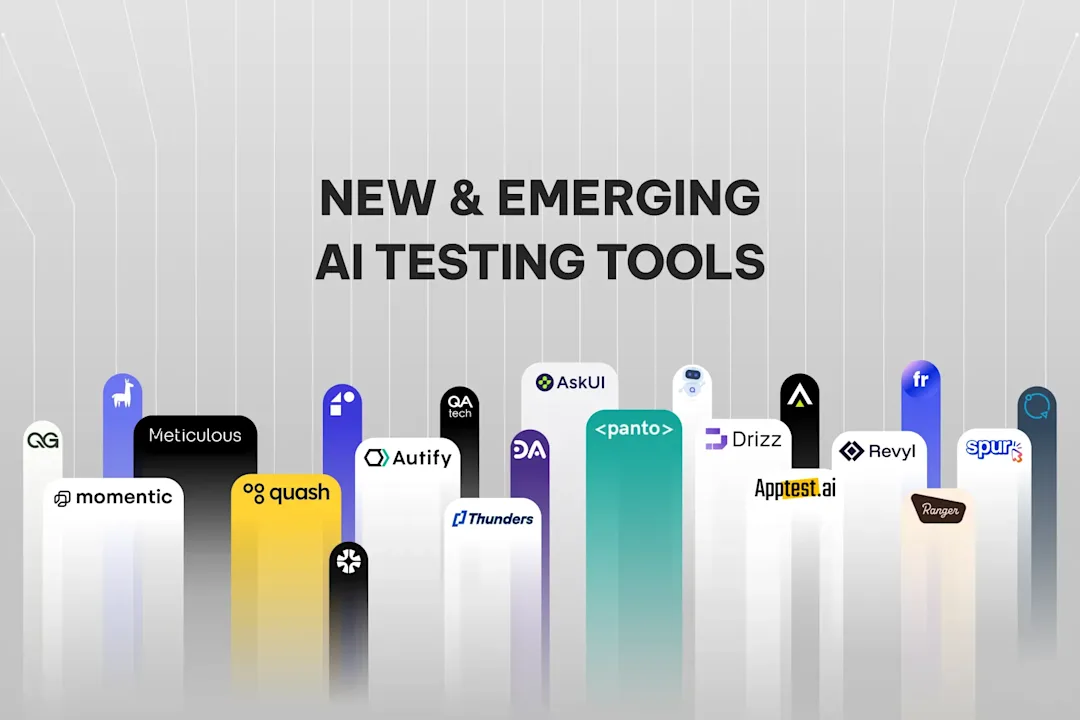
One reason SDET roles have become so critical is the explosion of AI tools for test automation. In 2026, SDETs have an impressive arsenal of AI-driven tools and technologies to supercharge their testing efforts. Here are some key categories and examples:
Generative AI Assistants (Coding Co-Pilots)
Large language model (LLM) based tools like GitHub Copilot and AWS CodeWhisperer have become game-changers for testing. These AI pair-programmers can auto-generate code, including test scripts, based on natural language prompts. For example, GitHub Copilot can suggest entire test functions and assertions as you write, or even produce a complete test case from a prompt like “Write test cases for login functionality with valid and invalid scenarios using Selenium.” In practice, such a prompt yields a ready-to-run script covering both successful and failed login attempts. Copilot also analyzes context from your codebase – if you have helper methods or page objects defined, it will smartly reuse them in its suggestions. This dramatically accelerates test development. Testers using Copilot have reported faster creation of unit tests and fewer omissions, since the AI often catches scenarios the human author might miss. Similarly, CodeWhisperer integrates with IDEs to recommend code for test cases, data generation, and even security checks. While these tools don’t eliminate the need for coding skill, they “handle boilerplate code, page object generation, and repetitive tasks with ease,” acting as a productivity multiplier for SDETs. Of course, human review remains essential – one must verify the AI’s output for correctness and security (Copilot might occasionally suggest insecure code or incorrect assertions). Used wisely, LLM assistants allow SDETs to focus on complex logic while the AI handles routine portions of test automation.
AI-Powered Testing Platforms
Beyond coding assistants, a range of AI-driven test automation platforms has emerged. These are tools specifically built to leverage AI for various testing tasks. Many such platforms share common features: “autonomous test creation, self-healing scripts, visual testing, and predictive analytics,” to name a few. For instance, autonomous test generation means the tool can create test cases automatically by analyzing either the application under test or artifacts like requirements. Some tools use natural language processing to convert requirements or user stories into test scenarios. Others perform exploratory crawling of your application’s UI to generate end-to-end tests (as seen in tools like Virtuoso and Testim).
Self-healing automation is another huge benefit – frameworks like Testim, Functionize, and others use machine learning to identify UI elements more resiliently than traditional locators. If a button’s ID or position changes, the AI can still find it via other attributes or computer vision, reducing test breakage. This significantly cuts down maintenance effort. An SDET can trust that minor UI changes won’t cause dozens of tests to fail, as the AI will “heal” the scripts on the fly. Many teams have seen flakiness of GUI tests drop thanks to self-healing tech.
Visual testing tools leverage AI (often computer vision) to detect differences in UI appearance. A leading example is Applitools Eyes, which uses an AI-powered engine to compare screenshots and catch visual regressions (while smartly ignoring insignificant pixel changes). This enables testers to verify not just functionality but also look-and-feel across devices and resolutions, which is especially useful in responsive web and mobile apps.
Predictive analytics and intelligent test planning: AI can analyze past test results, code changes, and even runtime data to prioritize what tests to run or to predict where bugs are likely. For example, machine learning models can predict modules of the code that are “more likely to contain defects” based on code churn and historical bug patterns. SDETs use these insights to focus testing on high-risk areas, achieving more bang for their buck in each test cycle. AI-based test prioritization and selection are increasingly built into continuous testing platforms (like Azure DevOps’s Test Impact Analysis or specialized tools that integrate with CI to run only affected tests).
Notable AI testing tools in 2026 include: Functionize, Mabl, Tricentis Testim, testRigor, Virtuoso QA, Applitools, and others. Each has its niche – some excel at end-to-end web testing, others at API testing or mobile. For example, Functionize provides a cloud-AI solution to create and run tests with a mix of natural language and recorded actions, plus advanced analytics. Mabl offers an easy-to-use interface for automated tests with built-in AI for things like auto-healing and visual assertions. Testim (now part of Tricentis) uses machine learning for stable element selectors. Many of these platforms allow “low-code or codeless” test creation aimed at enabling non-programmers to contribute to automation by describing test steps in plain language. This can complement an SDET’s work by letting domain experts create basic flows while the SDET focuses on complex scenarios and maintaining the overall quality pipeline.
It’s worth noting that AI tools are also assisting in test data generation and environment management. For instance, some AI can generate realistic test data (names, emails, etc.) on the fly, or mask sensitive data intelligently. Others might auto-provision test environments based on application needs. All these reduce the manual toil that QA teams historically handled.
Intelligent Analysis & Monitoring
Another class of AI tools helps SDETs after tests are executed – making sense of results and monitoring systems for anomalies. A practical example comes from a senior SDET who integrated an LLM into their CI pipeline to summarize test failure logs and pinpoint likely causes, saving hours that would be spent combing through logs manually. The AI would read a stack trace or error log and produce a concise summary like, “Test failed due to null pointer exception when calling the payment service API,” possibly even highlighting the specific module. This kind of AI-driven root cause analysis accelerates the feedback loop to developers. We also see AI applied in monitoring running applications (AIOps) – for example, alerting if a pattern in production logs indicates a performance regression or a creeping issue. SDETs increasingly collaborate with SREs and use such AI monitors to catch issues that only appear under real-world load or over time.
Smart test scheduling and optimization is another benefit: AI can optimize when and how tests run. If certain tests tend to always pass, an AI might suggest running them less frequently or in specific conditions to save time. Conversely, if certain tests fail often or catch many bugs, the AI ensures they run early and on every build. These kinds of optimizations, sometimes called “execution intelligence,” allow teams to get faster feedback with less computational cost.
In performance testing, AI can analyze metrics across many test runs to detect anomalies that a human might overlook. For instance, an AI might learn the normal range of response times for an API and flag any test run where the response time deviates significantly (even if it’s not outright failing thresholds yet). It can even suggest new performance tests – e.g. “We noticed a pattern of slow queries under condition X; consider adding a stress test for that scenario”. SDETs leveraging these insights can proactively address performance issues before they hit production.
In summary, the AI tools for test automation in 2026 range from coding assistants like Copilot to full-fledged autonomous testing platforms and analytics engines. An effective SDET will combine these tools with their expertise. For example, you might use Copilot to stub out a bunch of unit tests quickly, use an AI platform to cover your UI happy paths with minimal effort, and then focus your own energy on edge cases or writing a custom property-based test for a complex algorithm. The net effect is a huge boost in productivity and coverage – one SDET can accomplish what might have taken a whole team of manual testers in the past. As one testing blog puts it, today’s AI tools promise “smarter, faster testing through machine learning and automation,” but they work best in the hands of testers who understand how to aim them at the right targets. The human intuition and domain knowledge of an SDET, combined with AI’s speed and scale, make a formidable team.
Mobile Testing with AI: How Tools Like Quash Are Changing QA
Mobile app testing presents unique challenges – dozens of devices and OS versions, rapidly changing UIs, and complex user interactions like gestures. These challenges historically meant a lot of manual effort or fragile scripted automation (e.g. maintaining Appium scripts that frequently broke with app updates). AI is stepping in to revolutionize mobile testing with AI, and one shining example is tools like Quash.
Quash’s AI-powered platform auto-generates detailed mobile app test cases (with steps, preconditions, and expected outcomes) directly from design specs. Testers can create comprehensive, scriptless test suites by simply providing a PRD (Product Requirement Document) or UI design, which Quash’s AI agents turn into executable Appium tests.
Quash is an AI-driven mobile app testing platform that illustrates how AI can augment mobile QA. It “streamlines mobile QA from pull request to release,” automatically mapping out every screen in your app, generating test cases, and even handling bug reporting in one unified workflow. The goal is end-to-end automation of the mobile testing lifecycle. For example, when given a design file or product spec, Quash’s AI can produce an initial set of test scenarios covering key user flows – without a human writing a single line of script. These tests are executed on real devices or emulators in parallel, exercising the app just like a human would (taps, swipes, data entry, etc.).
Agent-driven workflows need explicit interfaces to the environments where tests run; MCP servers for testing helps define those boundaries without disconnecting automation from execution.
One of the most powerful aspects is Quash’s AI test generation and adaptation. According to the Quash team, “from generating tests to recognizing what’s on screen, Quash uses AI at every step, making QA faster and adaptive.” The platform leverages computer vision to identify app elements and understand when, say, a “Login” button appears on a screen. It then can automatically craft a test step to tap that button, and an assertion to verify the expected result (e.g. user navigates to home screen). If the app’s UI changes (the button moves or is renamed), the AI recognition adjusts – this is the self-healing in action. As Quash puts it, “Your tests [are] unbreakable – Quash self-heals test steps as your product evolves, cutting down maintenance and keeping coverage intact.” For mobile teams shipping updates frequently, this is a game changer. It means you don’t have to spend days updating your test scripts for each app release; the AI does it for you.
Another benefit is sheer speed and coverage. AI can generate and run tests at a scale that would be impractical manually. Quash, for instance, can spin up tests across many devices and OS versions simultaneously. It advertises capabilities like “with parallel execution, Quash scales your testing across devices and OS versions without slowing you down,” dramatically increasing platform coverage. In one use case, a team was able to cover 4x more edge cases and boost overall test coverage by 87% after adopting AI tools for mobile testing, while also reducing the cost and time by orders of magnitude (as noted on Quash’s site statistics).
It’s not just Quash – other tools are integrating AI for mobile testing too (though Quash is explicitly focused on mobile). For example, Perfecto and Sauce Labs (popular mobile testing clouds) are adding more intelligent test analytics and self-healing capabilities. Even frameworks like Appium are seeing AI plugins for things like finding elements by visual recognition. The trend is that mobile SDETs now have AI assistants to handle the laborious parts of mobile testing: generating exhaustive test steps, dealing with flaky object locators, running tests on a matrix of devices, and analyzing results.
For mobile testers making the shift to SDET, embracing these AI tools is key. Instead of writing 100 Appium scripts by hand, an SDET can supervise the AI generation of those tests, then spend their time reviewing and enhancing critical scenarios. They might also focus on writing custom test code for complex mobile features (like integrating with device sensors or testing offline functionality) while letting AI cover the basics. By incorporating tools like Quash into the QA pipeline, teams achieve a blend of speed (from AI automation) and insight (from human testers). Mobile app quality can thus keep up with the rapid pace of mobile development, without requiring an army of manual testers. In short, “mobile testing with AI” is making it feasible to attain high quality and coverage in mobile apps, and SDETs who leverage these technologies can deliver robust mobile software with much greater efficiency.
Upskilling from QA to SDET – Practical Advice for Testers
Making the leap from a traditional QA role to an AI-savvy SDET role can be intimidating, but it is absolutely achievable with the right approach. Here are some practical tips for testers transitioning to SDET, especially with an eye on AI and ML:
Build Strong Programming Foundations
If you come from a manual testing background, ramp up your coding skills as a first step. Pick a language that’s popular in test automation (Java and Python are common, but JavaScript or C# are useful too depending on your stack). Start by writing simple scripts or automating small tasks. Then move to writing actual test scripts – for example, use Selenium or Playwright to automate a web login flow. The goal is to become comfortable reading and writing code daily. As an SDET, you’ll be expected to review developers’ code, write test harnesses, and maybe even contribute production code changes (for testability fixes). You don’t need to be a software architect, but you should have at least intermediate programming proficiency. Utilize the plethora of free resources and courses to learn coding and object-oriented design. Leverage tools like GitHub Copilot as you learn – it can suggest code and help you learn new patterns (and ironically, you’ll be learning how to use an AI tool in the process!). Coding is the bedrock skill that unlocks everything else in an SDET’s career.
Learn Automation Frameworks and DevOps Tools
Beyond language syntax, understand the frameworks and tools used in automation. This includes test frameworks (JUnit, TestNG, pytest, etc.), build tools (Maven/Gradle or npm, etc.), and CI/CD systems (Jenkins, GitLab CI, GitHub Actions). Try integrating a small test suite with a CI pipeline – for example, write a few API tests and set up GitHub Actions to run them on each push. Familiarize yourself with containerization (Docker) and possibly cloud services if your testing involves distributed systems. The idea is to grasp how automated tests fit into the larger software delivery process. Many QA folks transitioning to SDET find it helpful to also learn a bit about infrastructure as code and pipelines, because in modern teams the SDET might be responsible for maintaining the test environments and CI jobs. Invest time in learning source control (if you haven’t already) – become comfortable with branching, pull requests, code reviews, etc., since as an SDET you will live in the code repository alongside developers.
Upskill in AI and ML Basics
To thrive as an AI-focused SDET, you should develop at least a foundational understanding of machine learning concepts. You don’t need an advanced degree or to implement complex models from scratch, but you should know the basics: what is a model, how training works, train/test split, what is overfitting, etc. Familiarize yourself with common ML algorithms and where they apply. There are accessible online courses on Coursera, edX, etc., for “AI for everyone” or “AI for software engineers” that can be great starters. This knowledge will help you both in testing AI-powered features and in effectively using AI tools. For example, if your web app integrates an AI recommendation engine, you as SDET should know how to approach testing it (e.g. verifying it improves over time, checking for bias in recommendations). Or if you’re using an AI test tool, understanding its internals (say it uses computer vision to find elements) will help you trust and troubleshoot it.
In addition, experiment with some AI APIs or Python ML libraries like scikit-learn or TensorFlow in a pet project – perhaps try to write a simple script that uses an ML model to classify something (even as trivial as classifying text sentiment) and then write tests for that script. This will give you insight into how data, models, and code all come together. Companies are increasingly looking for QA who can “speak the language” of data science, so this skillset will set you apart.
Get Hands-On with AI Testing Tools
Reading about tools is good, but using them is far better. Try out at least one AI-powered testing tool end-to-end. Many have free trials or community editions. For instance, you could sign up for a trial of a platform like Testim, Mabl, or Functionize, and use it to create a small test suite for a demo web app. Or explore open-source AI utilities: there are VS Code extensions for using ChatGPT to generate tests, or libraries like Kombai (an AI tool that writes frontend tests) that you can play with. By doing this, you’ll learn the tool’s strengths and limitations. You’ll also get a feel for the new paradigms – e.g. creating tests via natural language or having an AI suggest test steps. Make sure to also practice with code assistants like Copilot (GitHub offers it free for students and there are free alternatives too). Force yourself to use Copilot while writing some test code – observe where it helps and where it might lead you astray. The experience will teach you how to craft good prompts and how much to rely on the AI. An SDET who is adept at using these tools can massively amplify their output, so it’s worth the time investment to practice now.
Develop a Quality Engineering Mindset
As you transition, start thinking like a quality engineer rather than a tester who executes scripts. This means always considering how to prevent issues rather than just finding bugs. Embrace practices like shift-left testing – get involved at the requirements and design stage to ensure testability and to write tests early. Also consider shift-right aspects – how will you validate quality in production (perhaps through monitoring and feature flags)? A quality engineering mindset also involves understanding the system architecture – know the components of the application, the data flows, so you can identify weak points where failures may cluster. Begin to view automation not just as writing scripts, but as building maintainable solutions that other team members can use. For instance, you might create a testing library that developers writing unit tests can use to easily generate test data or mock services. In the AI context, quality engineering extends to monitoring the AI itself (is our AI making correct decisions?) and ensuring a feedback loop from production back to testing. This holistic perspective will make you a much more effective SDET and a leader in quality practices.
Embrace Continuous Learning and Community
The tech world (especially AI in testing) is evolving daily. Dedicate time each week or month to learning new things. Follow influencers or practitioners who share tips on AI and test automation – many SDETs post threads on LinkedIn or X (Twitter) about their experiments with tools. Blogs and webinars can be goldmines for learning how others are doing AI-assisted testing. Engage with communities: for example, the Ministry of Testing forum has discussions on AI in QA, and seeing those conversations can spark ideas. If you can, attend a conference (even virtually) or local meetup on test automation or AI in software engineering. Networking with peers can open opportunities – perhaps someone is piloting a tool you haven’t heard of, or has insight on transitioning roles at a company. Some testers also pursue certifications or structured training for test automation and AI (there are courses branded as “AI for QA” etc.); those can be helpful but aren’t strictly required – practical experience and demonstrable skills matter more. Ultimately, treat your career development like an ongoing project: set learning goals (e.g. “In the next 6 months I will automate an API test suite with CI/CD and try out two AI testing tools”) and track your progress.
Mentorship and Team Support
If possible, find a mentor or someone who’s already in an SDET or AI-focused role. Their guidance can accelerate your learning. Don’t hesitate to also learn from developers on your team – pair with them to understand the codebase better, and in return you can share testing perspectives. When you start applying your new skills on projects, communicate with your team about what you’re doing. For instance, if you introduce a new AI tool in the pipeline, let the team know how it works and how it benefits the process. This not only helps you articulate your knowledge (solidifying it) but also positions you as a leader in adopting new technology.
Transitioning from QA to SDET is a journey that involves both technical growth and mindset change. There might be moments of impostor syndrome, especially when delving into AI or coding after years in manual testing. But remember that everyone learns these skills – none of us were born knowing how to write a Python script or evaluate an ML model. With consistent effort, you’ll surprise yourself with how far you come in a few months. And the payoff is huge: SDET roles are in high demand and often come with greater responsibility, creativity, and salary to match. Perhaps most rewarding, you’ll be playing a key part in the future of testing, where you’re not just doing tests but designing intelligent systems that test for you.
Future Outlook: Staying Future-Proof in an AI-Driven Testing World
Looking forward, the SDET role will continue to evolve alongside advancing AI capabilities. What might the next few years bring, and how can today’s engineers in test prepare?
One clear trend is that AI will get even better at the automation aspects of testing. We can imagine a near-future scenario where an AI agent observes the entire development process – from requirements changes to code commits to production metrics – and automatically manages a lot of the testing activities. In fact, this is already starting: autonomous AI agents in testing are emerging that can decide which tests to run, create new tests on the fly, and triage failures with minimal human input. As these technologies mature, the SDET’s focus will shift more to overseeing and guiding AI rather than writing low-level scripts. SDETs will define the policies and “guardrails” for AI-driven testing. For example, an SDET might set the acceptance criteria that the AI uses to decide a feature is adequately tested, or define the boundaries within which an AI can make autonomous decisions (perhaps specifying that any critical test the AI wants to skip must be approved by a human). In essence, SDETs become orchestrators of quality, managing a toolkit of AI assistants.
Does this mean eventually AI will “take over” testing completely? Unlikely, at least not for the foreseeable future. Software quality has as much to do with understanding user expectations and business risk as it does with exercising code paths. Those human aspects – understanding ambiguous requirements, empathizing with users, anticipating weird use cases – are things AI struggles with. Human testers will always be needed to do the exploratory, out-of-the-box thinking. What will change is that those humans will have a lot of mundane work lifted off their plate. As one LinkedIn tech lead quipped: “Earlier: You ran tests manually. Now: AI runs automation for you.” The role of the tester then becomes to handle what AI can’t. This could mean testing for qualities like user experience, ethical considerations, and trust – for example, ensuring an AI-driven feature is not only functionally correct but also fair and aligned with user expectations. It also means being the safety net who double-checks the AI’s conclusions. We may see titles like “AI QA Coach” or “Automation Strategist” emerge, where the job is to continuously improve the interplay between AI tools and the software development process.
To stay future-proof, SDETs should focus on the skills and roles that are hard to automate. Strengthen your abilities in critical thinking, test design, and domain knowledge of the business area you work in. Domain knowledge in particular becomes a major asset – if you deeply understand, say, healthcare workflows or finance regulations, you’ll be invaluable in guiding AI testing tools to cover the right cases and interpret results correctly. Also, double down on leadership and communication skills. As testing becomes more integrated across teams (everyone having some responsibility for quality), SDET professionals often act as quality leaders – teaching developers about testability, helping product owners define good acceptance criteria, and advocating for process improvements. AI won’t replace the need for convincing stakeholders why a certain testing strategy is needed or why a bug is critical.
Keep an eye on emerging technologies too. For example, test automation for AI systems themselves (like testing machine learning models’ accuracy or bias) is a growing specialty. Even if you’re not in an AI-focused company now, such skills could be highly relevant as more products include ML components. The field of ML model testing and validation – ensuring models meet quality thresholds and don’t degrade – will likely become part of the SDET’s expanded role. We already see testers branching into roles that are a hybrid of QA and data science. It’s reasonable to expect that in the next 5 years, many SDETs will need to know how to test an AI as well as they can test a UI.
Another aspect of future-proofing is to remain adaptable. The tools and best practices we use today might be outdated in a couple of years. For instance, today’s popular LLMs might be surpassed by new types of AI models; new programming languages or frameworks can arise. The specific tech matters less than your adaptability and continuous learning habit. If you maintain a growth mindset, you can pick up whatever new tool comes along. In fact, being the person on your team who is not afraid to experiment with a new approach will make you stand out. Companies value engineers who can keep them on the cutting edge – it’s a trait that essentially guarantees relevance in the job market.
In conclusion, the shift from automation QA to AI/ML-focused SDET roles is well under way and will define the software testing landscape of 2026 and beyond. Testing is becoming more high-tech, autonomous, and intertwined with development than ever before. By embracing AI tools, elevating your skill set, and focusing on strategic quality contributions, you position yourself not just to survive this change but to thrive in it. As one industry expert succinctly advised: “Future-Proof Career: Master tool-calling → evolve from QA to AI Automation Architect.” In other words, those who learn to leverage AI will become the architects of the next generation of quality engineering. The nature of testing may transform, but the mission remains: delivering high-quality software. With AI as a partner, SDETs are poised to achieve that mission more effectively than ever before – and that’s an exciting future to be part of.
The broader discipline behind these capabilities is examined in AI in software testing, including how AI changes the work of quality engineers.
References:
Debolina Das – “AI and Automation – Top 3 Impacts on SDETs in Modern Enterprises,” Aspire Systems Blog (Oct 2023)
Ministry of Testing Club Discussion – “Emergence of new QA AI Specializations?” (May–June 2025)
Shrividya Hegde – “Fueling Test Automation with AI: an SDET’s approach,” Medium (Nov 2025)
Lamhot Siagian (via LinkedIn) – “How to survive as an SDET in the AI era: 4 skills to learn,” post series (2025)
Mahesh Wankhede – “GitHub Copilot: A Game-Changer for QA Automation,” TO THE NEW Blog (Jan 2025)
Quash – AI-Powered Mobile App Testing Platform, product website (2025)
TestRail Team – “8 AI Testing Tools: Detailed Guide for QA Stakeholders,” TestRail Blog (Nov 2025)
Leon Lau – “Software testing in 2026: Key QA trends and the impact of AI,” valido.ai Blog (Oct 2025)
Continue reading
More articles from the Quash editorial desk.